

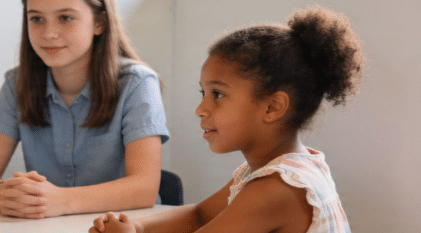
Conflict is a normal part of life in schools, youth groups, and community settings. The question isn’t whether disagreements will happen, but how they are handled. Peer mediation offers a constructive, empowering approach that equips young people with the skills to resolve disputes calmly, fairly, and confidently.
In our service, we believe that teaching young people to manage conflict early lays the foundation for healthier relationships, stronger communities, and better long-term outcomes. We have therefore been partnering with Quakers in Britain and the Civil Mediation Council to offer Peer Mediation training, hosting two three-day training courses taking place in Headingley.
What Is Peer Mediation?
Peer mediation is a structured process in which trained young people help other young people resolve conflicts. Rather than relying solely on teachers, parents, or authority figures to intervene, peer mediation gives pupils the opportunity to:
Speak openly in a safe environment
Be heard without judgment
Work collaboratively towards a mutually acceptable solution
Peer mediators do not take sides or impose decisions. Instead, they facilitate a calm, balanced conversation that helps those involved reach their own agreement.
Where Did Peer Mediation Come From?
Modern peer mediation programmes developed from community mediation practices, drawing inspiration from restorative and conflict resolution movements in the 1970s. In the UK, the Quakers initiated structured listening and school-based peacekeeping practices which led to a country-wide programme to train peer mediators.
Over time, schools across England, Scotland, Wales and Northern Ireland have adapted peer mediation to suit their own communities – with consistently positive results.
How Peer Mediation Works in Schools
A typical peer mediation scheme includes:
- Training Peer Mediators
Selected pupils receive structured training in:
Active listening
Neutral questioning
Managing strong emotions
Problem-solving techniques
Confidentiality and safeguarding awareness
- A Clear Referral Process
Conflicts such as friendship breakdowns, playground disputes, name-calling, and minor disagreements can be referred to mediation — either by pupils themselves or by staff.
- The Mediation Session
The peer mediators guide both participants through:
Sharing what happened
Exploring feelings and perspectives
Identifying common ground
Generating solutions
Agreeing next steps
The agreement is voluntary and created by the young people themselves.
The Benefits of Peer Mediation
Research and experience show that peer mediation can:
Reduce low-level behavioural incidents
Improve communication skills
Increase empathy among pupils
Strengthen school culture
Build leadership and confidence in mediators
Reduce pressure on teaching staff
Importantly, it shifts the culture from punishment to problem-solving.
In some cases it is inappropriate for children to conduct mediation with their peers and trained adult professionals must take the lead, such as in cases of bullying or more significant and intense conflict.
Why Invest in Peer Mediation?
When young people are trusted with responsibility and given the right tools, they rise to the challenge.
Peer mediation:
Encourages accountability
Promotes emotional intelligence
Develops future leaders
Creates calmer learning environments
It is not simply a behaviour management tool — it is a long-term investment in social and emotional development.
How We Support Schools and Youth Settings
Vollans Mediation has provided a venue for ‘Train the Trainer’ courses, hosting adults from youth, education and mediation settings who are then able to deliver training in primary and secondary schools across the country.
Our staff have also delivered the peer mediation training to students in a local secondary school, as well as broadening the awareness of peer mediation by contacting local schools, offering time, resources and information.
Final Thoughts
Peer mediation empowers young people to resolve disagreements constructively, giving them skills they will carry into adulthood – in friendships, workplaces, families and communities.
If you would like to explore introducing peer mediation in your school or youth setting, we would be delighted to speak with you.
Building peaceful communities starts with giving young people a voice.